Newsletter Subscribe
Enter your email address below and subscribe to our newsletter

 ByJohn A
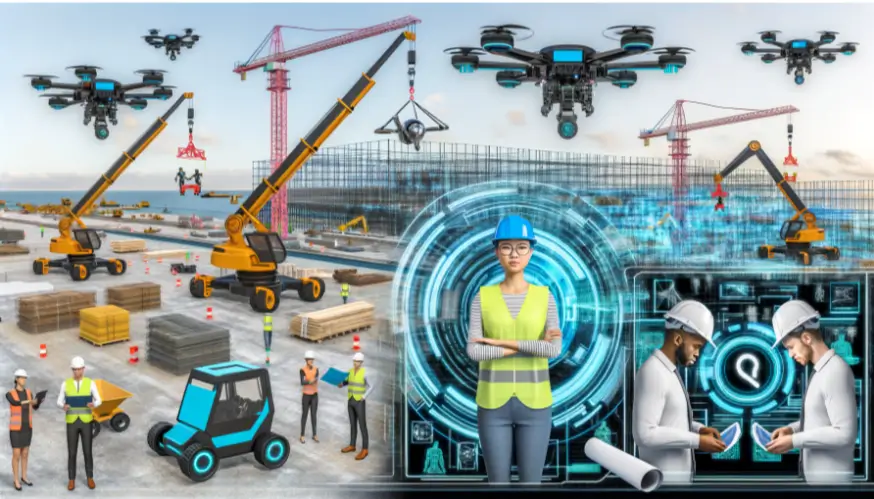
AI-tuned safety on construction sites blends sensor data from wearables, cameras, LiDAR, and equipment to create a coherent situational picture. Real-time fusion enables proactive hazard detection with contextual understanding and supports transparent risk assessments aligned with on-site workflows. AI-driven analytics tailor training, enforce standards, and track competency, offering measurable ROI. The approach prompts timely interventions and continuous improvement, inviting stakeholders to consider how these insights will shape next steps and on-site practices.
AI-tuned safety on construction sites refers to systems that continuously monitor conditions, predict risky moments, and prompt timely interventions. The approach emphasizes AI augmented oversight, integrating data from workers, equipment, and environments to guide decisions without impeding progress. Predictive ergonomics targets postural stress and repetitive strain, informing workflows that reduce fatigue while maintaining productivity and safety standards across diverse site operations.
Sensor fusion enables real-time hazard detection by integrating data streams from wearables, cameras, LiDAR, environmental sensors, and machinery telemetry to create a coherent situational picture.
This approach supports identifying hazards promptly and contextually, enabling proactive responses.
The method emphasizes data integrity, robust fusion algorithms, and scalable architectures, offering transparent risk assessments while respecting operator autonomy and a safety-focused, freedom-respecting on-site culture.
See also: How AI Is Changing Video Creation
Smart training and compliance through AI insights leverages automated analytics to tailor instruction, monitor proficiency, and enforce standards across construction sites. The approach enables risk modeling to anticipate hazards, optimize training sequences, and document competency with auditable records. It also supports workforce engagement by aligning feedback with real-time performance, reducing variability, and promoting proactive safety culture without compromising freedom to operate.
Building on the analytics-driven improvements in training and compliance, this section evaluates the tangible outcomes of AI-enhanced safety programs. ROI, compliance adherence, and continuous improvement metrics are examined through risk assessment and data governance lenses, offering actionable insights for scalable safety gains.
| Metric | Outcome |
|---|---|
| ROI | Measurable cost savings |
| Compliance | Higher audit readiness |
AI systems filter repeated triggers and adjust thresholds to reduce false alarms on busy sites, balancing safety with workflow. They leverage context to distinguish activity from hazards, accounting for site congestion, worker privacy, and minimal intrusion while maintaining proactive monitoring.
Ethical concerns with AI monitoring workers include privacy concerns and surveillance impact; skeptics argue empowerment is possible yet balance is essential. Proactive evidence suggests transparent data governance, limited scope, consent, and independent audit mitigate risks while preserving freedom.
AI cannot fully replace human safety supervisors. It supports oversight, delivers data-driven alerts, and augments decision-making. However, AI ethics and worker privacy concerns require retained human judgment, transparent governance, and continuous accountability to ensure freedom and trust in practices.
Silhouettes of closed eyes overlook the site, symbolizing guarded boundaries. Privacy protection and data minimization guide AI systems; worker data is limited, access controlled, and audits upheld, ensuring autonomous monitoring remains transparent, consent-based, and aligned with freedom-respecting safety objectives.
Implementation costs for small firms vary, but a concise cost comparison helps determine value; vendor selection should emphasize scalable pricing, training, and support. Proactively assessing hidden fees enables prudent budgeting while preserving freedom to adapt AI safely.
AI-tuned safety on construction sites integrates multi-sensor data to deliver timely hazard detection, contextualized risk assessments, and actionable interventions. Real-time fusion of wearables, cameras, LiDAR, and telemetry supports proactive decisions while preserving operator autonomy within existing workflows. AI-driven analytics tailor training, verify standards, and track competency, enabling measurable ROI and continuous safety improvement. Like a radar that anticipates storms, this approach provides foresight, clarity, and resilience, reducing incidents before they occur and safeguarding crews.